Monday, March 29, 2010

Real Madrid with triumphal win against their local opponents


Real Madrid won the derby match of the 29th round in Primera Division against their local opponents Atletico Madrid. The match fulfilled the expectations before the game had started. As the game started both teams had chances of scoring the first goal because of defence mistakes. In the 10th minute Hose Antonio Reyes form Atletico dribled and scored a goal-Casillas didn't have any chance of responding. After that Real were the dominant team on the field with many chances. Therefore, in the 49th minute Xabi Alonso scored a goal after the ball had been kicked from the corner flag and changed it's diraction because of the pass of Higuain. Then Alonso scored with a goal from less than 4 meters. No respond was felt from Atletico so immediately after that Arbeloa scored a goal after an individual dribble with the ball-2-1 for Real. Still the guests from Atletico commited a lot of faults and at the same time mistakes that were in favor for Real. Higuain scored the 3rd goal for his club and that was the point when Real insured their win. The last goal was scored by Atletico but it really didn't make any difference because there was no time for 3rd goal and Real won their game. With these 3 points they became again leaders of the league with equal points with Brcelona with better goal difference.

Thursday, March 25, 2010

Best Local Derby Matches


Celtic-Rangers: The biggest derby of UK. The Glasgow derby between Celtic and Rangers is dated back to 1888 and is referred to as the ‘Old Firm’ derby. The derby is in the spotlight now more than ever, with authorities clamping down on sectarian hatred. Celtic are considered a Catholic club and Rangers-Protestant, while political aspects also come into play. Like any other local derby, violence and abuse has always been a part of this one also as they hold the honours of having the most number of arrests. But that cannot take away the excitement from this rivalry which on matchdays can generate a worldwide audience of 150 million.

Milan-Inter: The Milan derby is contested between two of the most successful and glamorous clubs of Italy. It is often referred to as "Derby della Madonnina" in honour of one of the main sights of the city, the statue of the virgin Mary on the top of the Duomo, which is usually called "Madonnina". It is one of the few derbies where both teams share the same ground – San Siro. It is also believed that there is a certain South American rivalry between the two clubs. The Rossoneri (Milan) prefer Brazilian players while the Nerazzurri (Inter) have a liking for Argentinians.

Fenerbahce-Galatasaray: This Istanbul derby involves two of the most successful clubs of Turkey, who have 17 league titles between them. There is a class difference between the fans of the two clubs. Galatasaray fans are mainly from the aristocratic class while Fenerbahce fans are largely from the working class. There is a geographical divide also as Galatasaray is located in the European side of Istanbul, whereas Fenerbahçe is located on the Asian side. There has been no shortage of controversy in this derby with bookings, sending offs and clashes between the two sets of supporters a common thing.

Boca Juniors-River Plate: The derby between Boca Juniors and River Plate is one of the biggest in the world and possibly the biggest in South America. It is referred to as the El Superclásico and is between two of most popular clubs of Argentina. It is a clash between teams from two socially diverse backgrounds - the rich (River) and the poor (Boca). On matchday the entire country is at a standstill anticipating the outcome of the derby. The match generates worldwide popularity due to the sheer passion of the fans. The stands of both teams are loaded with passionate songs against their rivals, fireworks, flags and rolls of paper. This derby often ends in riots which are either between the two sets of supporters or between fans and the police.

Flamengo-Fluminense: This Rio de Janerio derby is arguably the biggest in Brazilian football. It is referred to as the Flu-Fla derby. The term was coined by a journalist named Mario Filho during the professionalization of Rio de Janeiro's football. Another name for this derby is Clássico das Multidões (Crowds' Derby). The rivalry between these two clubs began in October 1911, when a group of dissatisfied players from Fluminense left the club, and went to Flamengo, which at the time had no football section. It is currently played at the 70,000-seater Maracana Stadium but in 1963 both teams clashed in an epic derby that was played in front of a world record attendance of 194,603 fans at the same stadium.

Manchester United-Manchester City: Historically this local derby is not the biggest one in English football. Liverpool-Everton and Arsenal-Tottenham have much more history and are considered to be more important as the gap in success between the teams is not as huge as it is between the Manchester clubs. Now United are one of the most popular clubs in the world while City are probably the richest so the rivalry has gained new momentum.

fencing

In saber fencing and foil fencing, if both players score a hit at the same time the Right of Way(RoW) is applayed by the referee so only one of them gets a point. The right of way is gained in several ways :
  • Attacking the opponent. (In fencing the word attack is defined as: is the initial offensive action made by extending the arm and continuously threatening the opponent‘s target, preceding the launching of the lunge or flèche. In sabre the threat may be established with the point or the cutting edge, and the end of the attack coincides with the moment the front foot touches the strip).
  • Executing an attack which is preceded by a beat (parry) on the opponent's weapon
  • Deceiving the opponent's attempt to beat the blade (attacking an open sectors)
  • Executing an immediate return offense following the opponent's failed attack; this can be the result of a parry, or because they have fallen short of the target.
  • By continuous offensive action; avoiding an opponent's defensive actions and continuing to maintain a threat, by compound attack or by redoublement.
If neither of the players have the RoW in a double touch, no point is awarded.

Bayer Leverkusen vs. Shalke 04


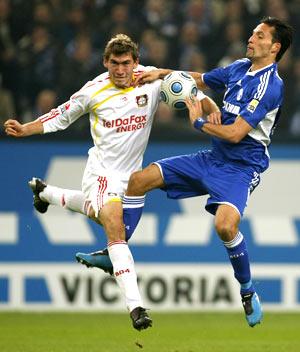
In the derby match of the German Bundesliga one against other will play the teams of Bayer and Shalke. Both teams did very well in their previous league matches and now are in the first three teams toplist. Most of their time Leverkusen stayed as team number 1 in Germany but recently they lost points and moved to the 3rd position with chances of winning the tittle. Shalke didn't started as expected at the beggining but they managed to win most of their matches and now they're 2nd with just a point behing the leaders Bayer Munchen. In they last 12 matches Leverkusen has 6 wins, 4 deuce matches and only 2 losts against Shalke. Recently it seems like Shalke are team with greater chances of winning this game because of their results that show a winning streak of 4 games before they made a deuce with Hamburger(2-2). I predict a match with not so much goals (Under 2.5 goals) and the winner will be the team that first scores a goal.

fencing - short history

http://www.valleymartialarts.com/images/sh1032.jpg
Fencing is not a very popular sport, but it improves the player's speed and dexterity and is includede as an olympic sport.
Fencing is all about speed and predicting you opponent's moves. While fencing the players assume a special pose known as angard. When the match begins, the players advance towards one another because they start at a considerable distance. Shortly after that the opponents collide.
There are three types of fencind, determined by the weapond the duelists use:
  1. Foil — a light thrusting weapon; the valid target is restricted to the torso, the chest, shoulders, and back; double touches are not allowed. This weapon follows the rule of "right of way"
  2. Épée — a heavy thrusting weapon; the valid target area covers the entire body; double touches are allowed. There is no "right of way"
  3. Sabre — a light cutting and thrusting weapon; the valid target area is the saddle line, which is from one side of the fencer's hip to the other, and up, this also includes the head. The target area does not include the hands. This weapon follows "right of way" The saber is also used for training because of its light weight.
Fencing dates to themedival ages when fencing schools and teachers were created and hired by nobles. There are also written text about faencing called treatises, written by fencing teachers and explaining the tactics of the certain teacher. The first of the treatises dates back to 1300 AD.
Than fencing was practiced with a broader sword and a small shield. Then fencing weapons elvloved nearer to the kinds seen nowadays - all noble families were instructed how to duel and dueling was a popular way to defend your honour. After World War II duleing dissapeared almost completely and the new weapons and rules described above began being used for sport and fencing (also called modern fencing) was created.

A horrible start for Bulgaria-goes ahead with visit of England


The Bulgarian national team will start their campaign for the European Championship in Poland and Ukraine in 2012 with visit of world champion of 1966 England at the legendary Wembley Stadium.

The match between the Bulgarians and the Albion lions will be held at September 3rd. Just four days later, the Bulgarian national football team will play against the tough team of Montenegro at "Lazur" stadium in Burgas.

The biggest achievement of England in a European Championship is a semi-final stage in 1996-then they lost on penalties by Germany. Also, the Brits were the world champions one time - in 1966, when "the fraud of the century" by Jeff Hurst gave a 4-2 victory over England's eternal rival, Germany.


The complete schedule of Bulgarian national football team:

September 3, 2010 - England - Bulgaria

September 7, 2010 - Bulgaria - Montenegro

October 8, 2010 - Wales - Bulgaria

12 October - Bulgaria doesn't play

March 26, 2011 - Bulgaria - Switzerland

June 4, 2011 - Montenegro - Bulgaria

September 2, 2011 - Bulgaria - England

September 6, 2011 - Switzerland - Bulgaria

October 7, 2011 - Bulgaria doesn't play

October 11, 2011 - Bulgaria - Wales

After a brilliant game yesterday (24th of March) FC Bayern München qualified for the final

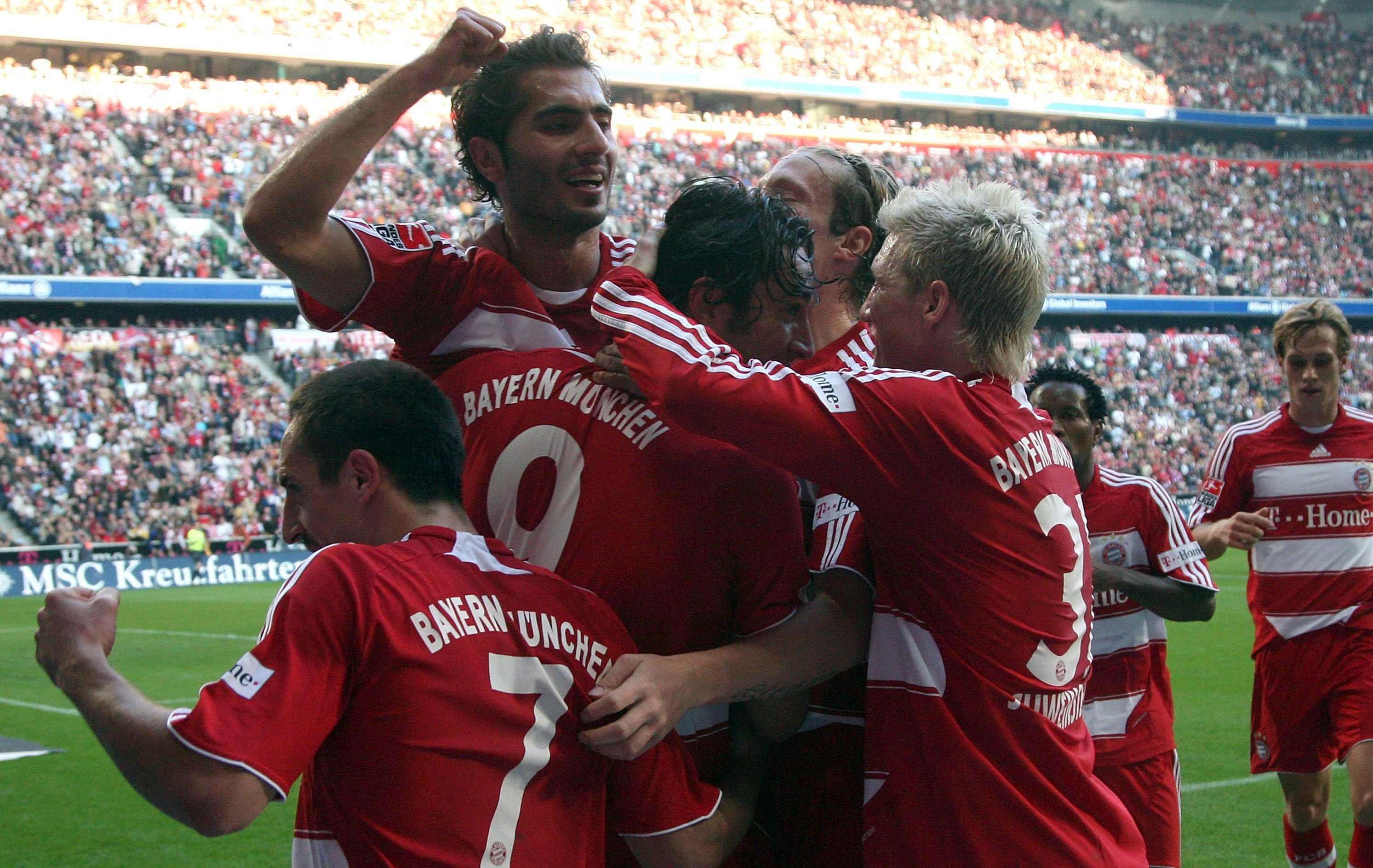
After an astonishing victory against Schalke 04, Bayern will travel to Berlin where they will meet Werder Bremen for the last game for the DFB-Pokals. Bayern won yesterday after 120 minutes of play. The winger of the team Robben scored in the 112th minute. Van Gaal had a strange strategy, but it was very successful. Ribery didn't play during the first half, but when he came to the soccer field, Schalke didn't have any chance, but to pull back to their side of the field. Ribery had some very powerful shots to the opposite goal. After he appeared on te field he caused two changes in Schalke's team. After this Bayern had two more fresh people waiting for the next 30 minutes, while Schalke didn't have any. After Arjen Robben scored in the 112th minute of the game, Van Gaal chose to waste some time and made some changes in the team during the 116th and 120th minute. Yellow cards received Schweinsteiger and after him was Robben who received a yellow card just 1 minute after his goal.
After this last game for the half finals of the DFB-Prokals : "Berlin, Berlin, wir fahren nach Berlin!", which traslated from German means "Berlin, Berlin, we travel to Berlin!".
After the match against Schalke 04 that was visited by about 61, 000 people, we are expecting a huge event visited by whole Germany with thousends and thousends
of fans. For the 17th time Bayern will take part in the final for the
DFB-Proklas cup.